
Plastering and Drylining: What They Are, When You Need Each, and How to Choose the Right Contractor
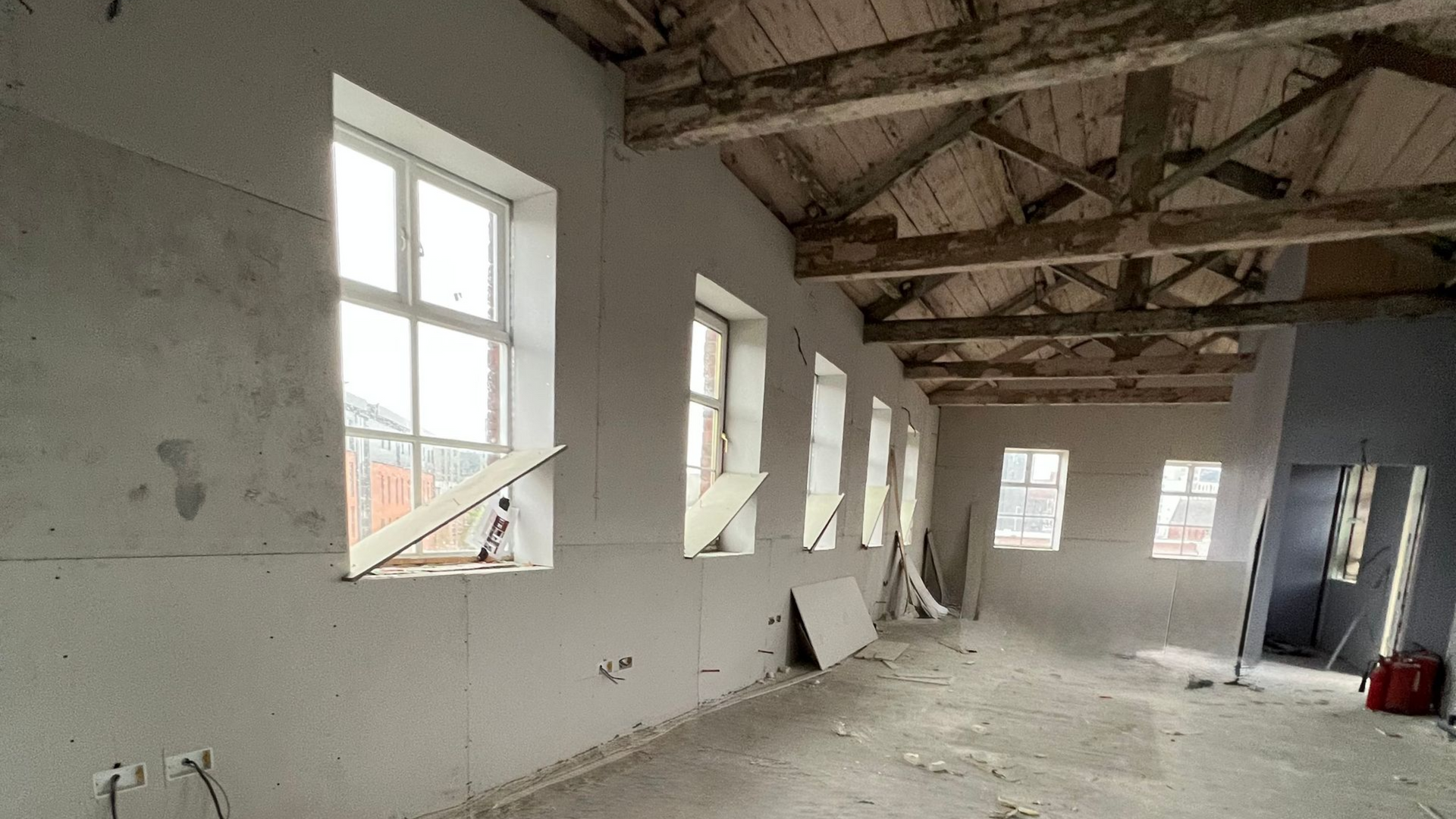
Plastering and drylining sit right in the middle of what people see and touch in a building. The walls. The ceilings. The corners that need to look straight under harsh lighting. The partitions that need to be performed for fire, sound, and everyday wear.
Yet these trades are still misunderstood. Some people use plastering and drylining as if they mean the same thing. Others assume drylining is a cheap shortcut or that plastering is always the premium option. In reality, both have a place. The right choice depends on the programme, the performance needs, the finish standard, and how the internal package is being delivered.
This article explains plastering and drylining in plain English, shows where each fits in a build or fit out, and highlights the practical questions buyers should ask before appointing a contractor. It also explains why a combined internal package can reduce risk and help a project run more smoothly on site, particularly when you need partitions, ceilings, SFS, tape and jointing, and plastering all working together.
AR Drylining delivers plastering and drylining packages for commercial, retail, education, and residential projects, working across the UK from a South Yorkshire base. If you are pricing a project, the goal is simple: get a finish that looks right, performs right, and does not create programme headaches.
Why do people mix up plastering and drylining
At a glance, both trades aim for the same outcome: clean internal surfaces ready for paint, wallpaper, or specialist finishes. That is where the confusion begins. The difference is how you get there.
The shared goal: smooth, durable internal finishes
Whether you are fitting out a retail unit, refurbishing an education space, or handing over apartments, the internal finish needs to do two jobs at once.
First, it needs to look good. Straight lines, clean junctions, minimal cracking, and a surface that holds paint evenly.
Second, it needs to hold up. Walls and ceilings take knocks, movement, moisture variation, and constant use. A finish that looks perfect at practical completion can still become a snagging nightmare if the system was not right for the space.
Plastering and drylining both deliver the visual outcome, but the method and the performance options differ.
The key difference: wet plaster versus board systems
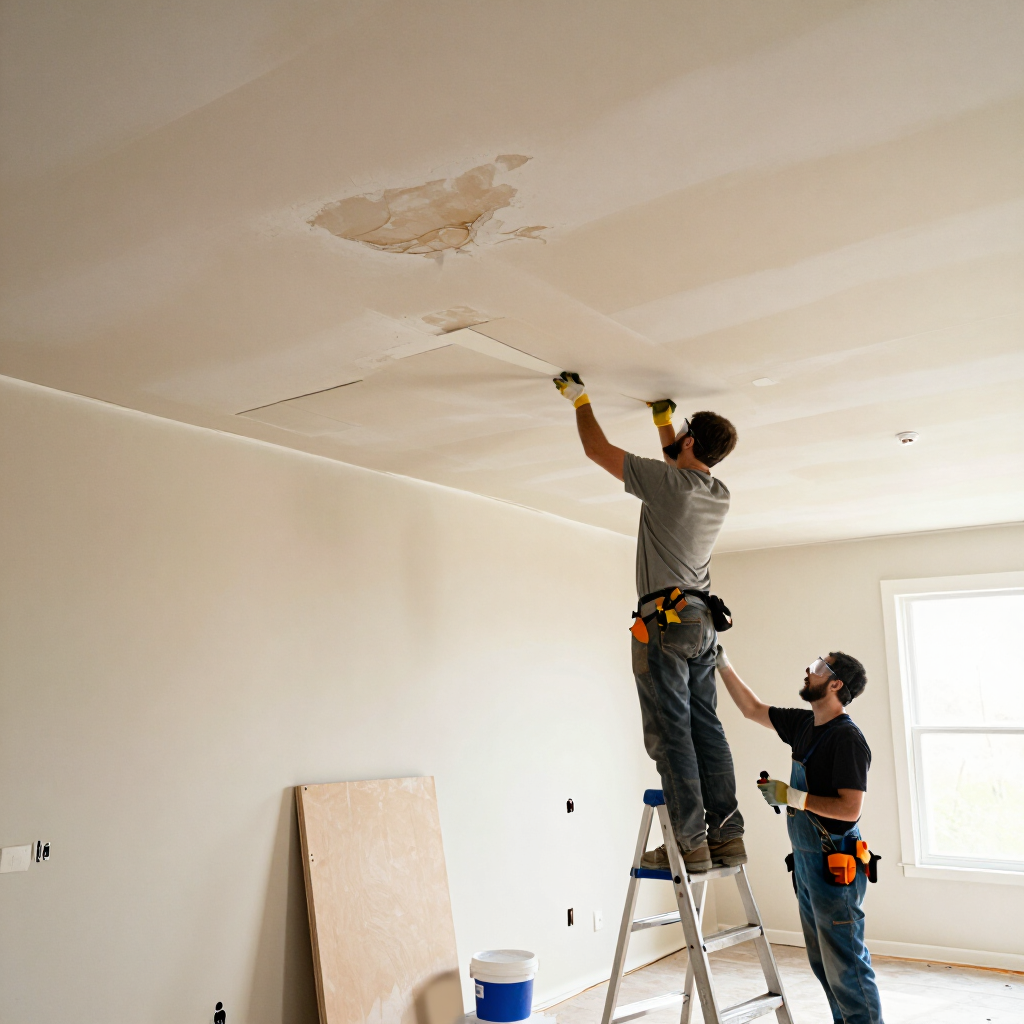
Plastering is a wet trade. It involves applying plaster to a substrate, which may be masonry, existing plaster, or plasterboard. It then needs time to cure and dry before decoration.
Drylining is a board-based system. It uses plasterboard and associated components to create wall linings, partitions, and ceilings. The finishing can be tape and jointing, or it can be a skim coat if a plaster finish is required.
In modern construction, drylining is often the backbone of internal layouts, while plastering is used as a finishing method where it adds value or where the substrate demands it.
Where each trade usually sits in the programme
Drylining tends to be a framework trade. It often begins once the structure is weather-tight and the internal first-fix sequence is underway. It is closely linked to M and E coordination, access, and sequencing.
Plastering often sits later in the programme, once board work or backgrounds are ready. It can also be used early on masonry where traditional plaster is required, but that is less common in fast-paced fit-out environments.
On many projects, the most efficient approach is not choosing one over the other. It is choosing the right drylining system, then selecting the most suitable finish, whether that is tape and jointing or a skim.
What is drylining in construction
Drylining is a practical, scalable way to build internal walls and ceilings with predictable performance. It is used in everything from high street retail to education buildings to residential developments.
Dry lining explained in plain English
Drylining is the process of creating internal surfaces using boards, typically plasterboard, fixed to a framework or directly to a background. It is called drylining because it avoids the wet process of traditional plastering across large areas.
Drylining is not just about making walls smooth. It is also a way to engineer performance into the building. Fire resistance, sound insulation, and thermal improvements can all be built into the system by selecting the right board type, insulation, studs, and detailing.
Partitions, linings, and internal wall systems
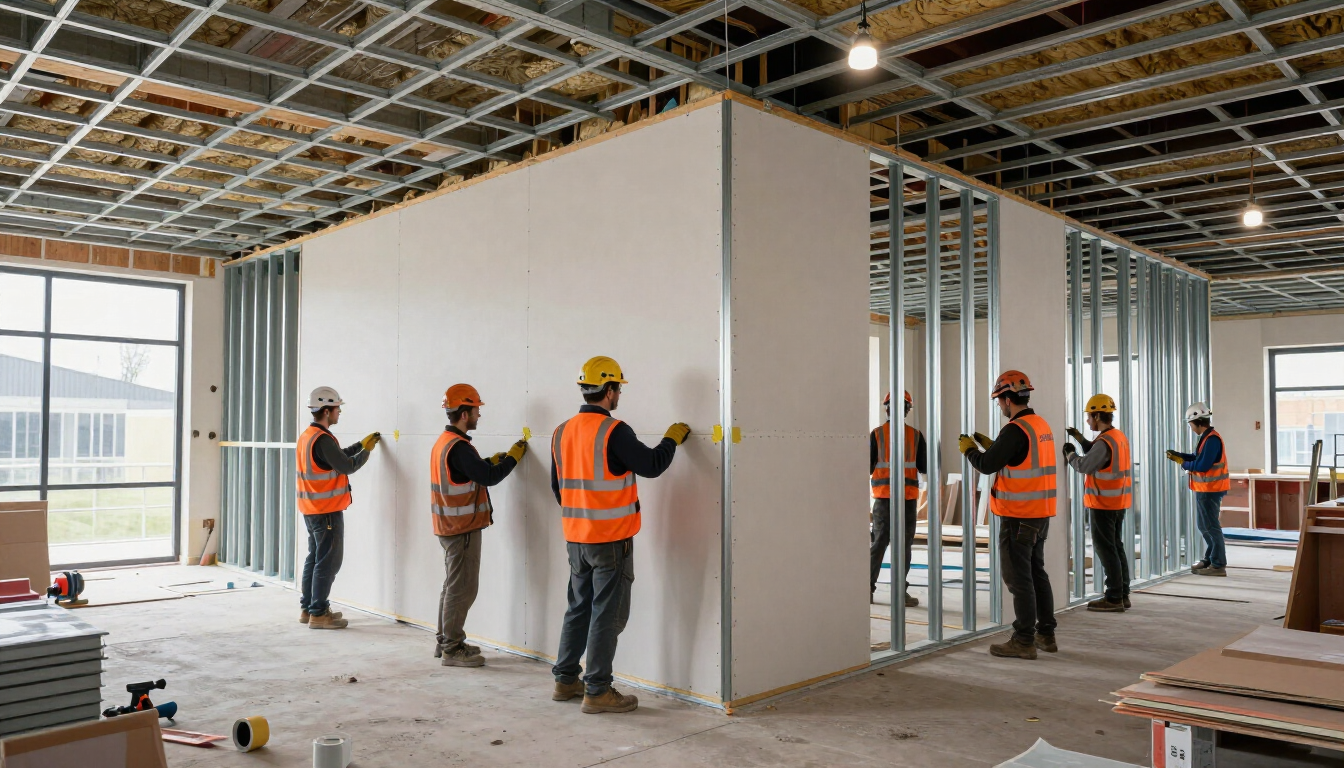
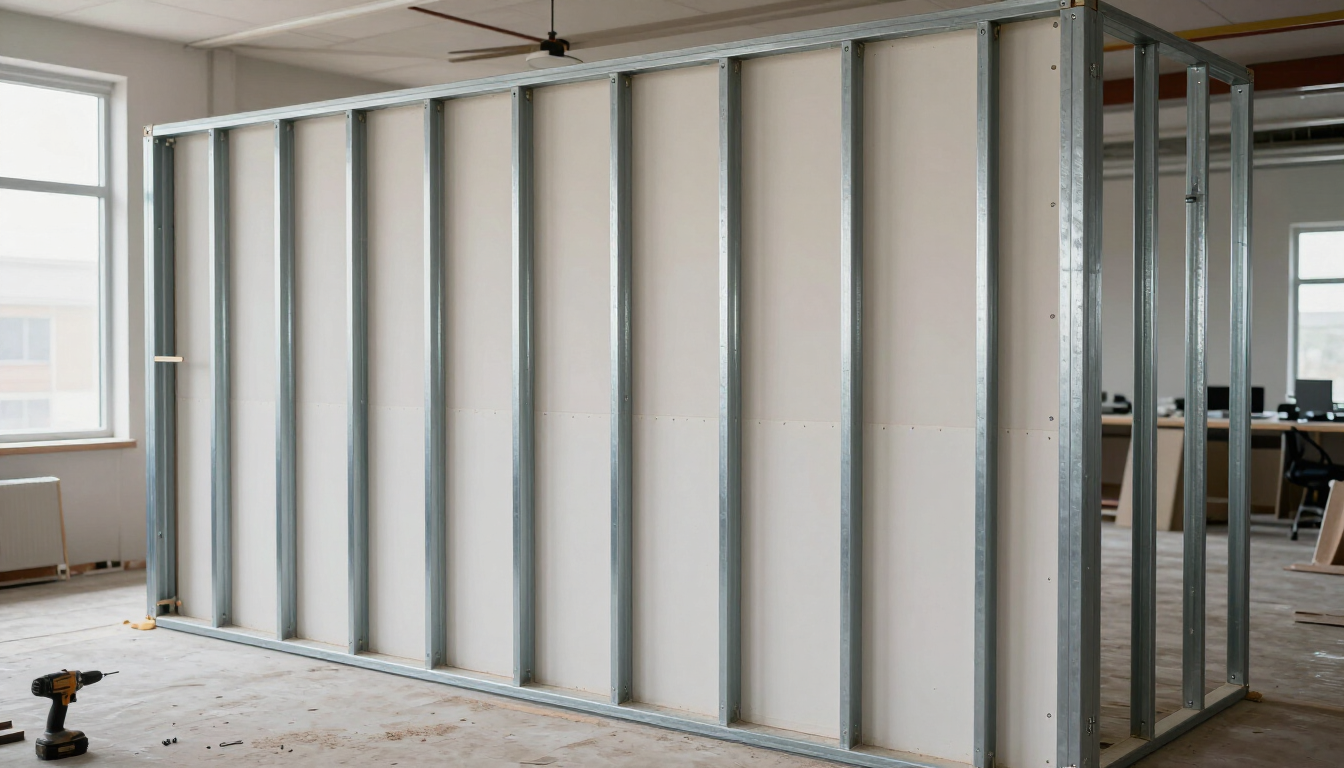
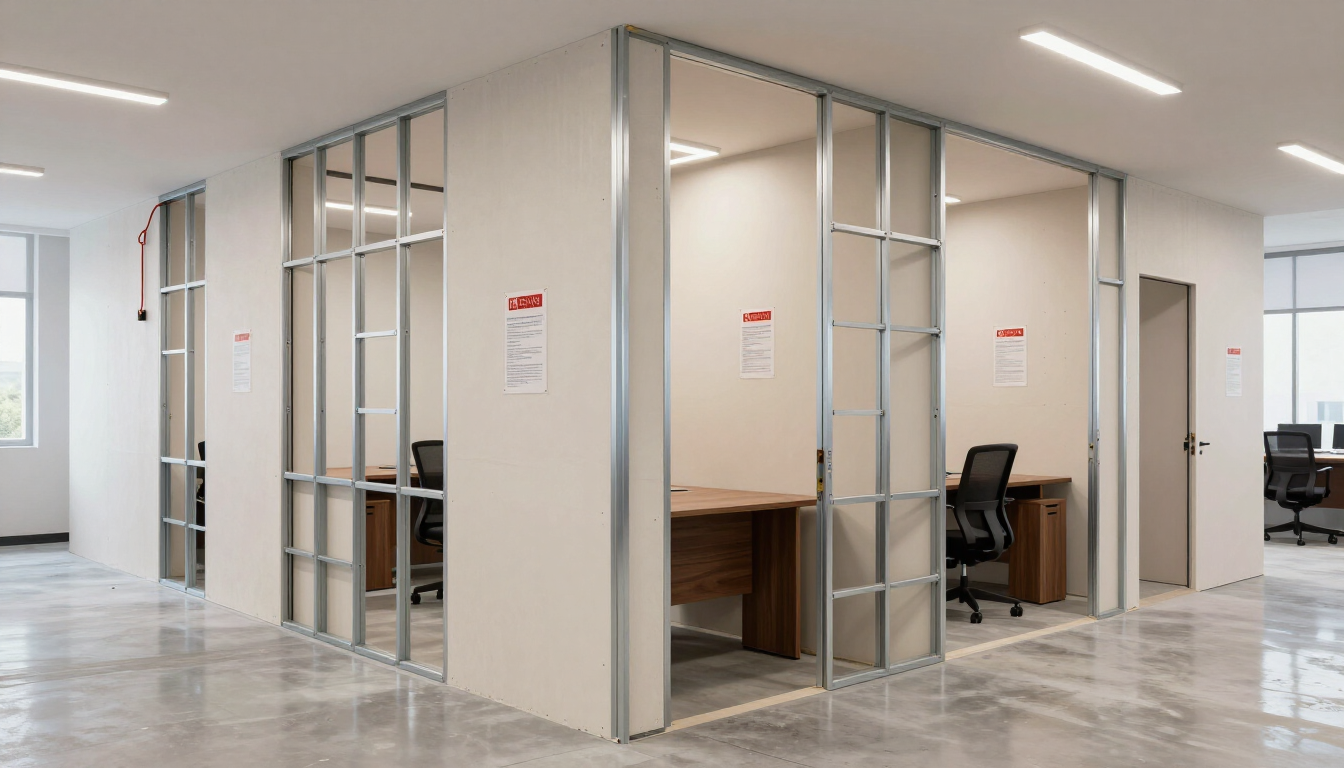
A drylined partition is often a metal stud wall with boards fixed to each side. Insulation may be installed within the cavity to improve acoustic performance. Specialist boards may be used for fire resistance or moisture resistance.
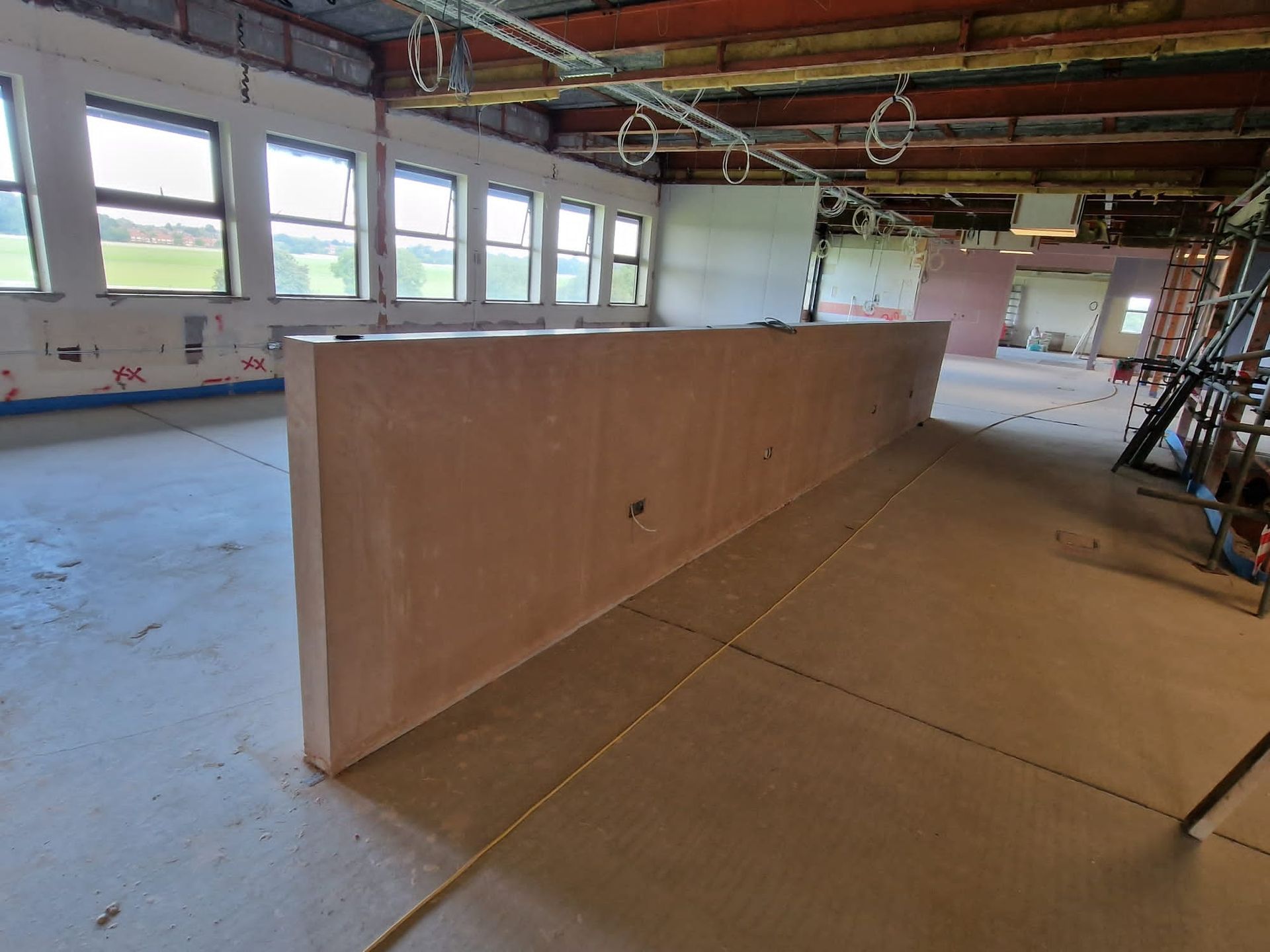
Wall linings may be installed to improve the finish of masonry, straighten uneven backgrounds, or add thermal and acoustic properties. In refurbishment, linings are often used to bring older walls up to modern standards while keeping the programme under control.
From a procurement point of view, partitions and linings are where drylining becomes a risk reducer. The system is repeatable, measurable, and easier to coordinate with other trades than traditional wet plaster across the whole shell.
Ceilings: MF systems and suspended grid ceilings
Drylining also covers ceiling systems.
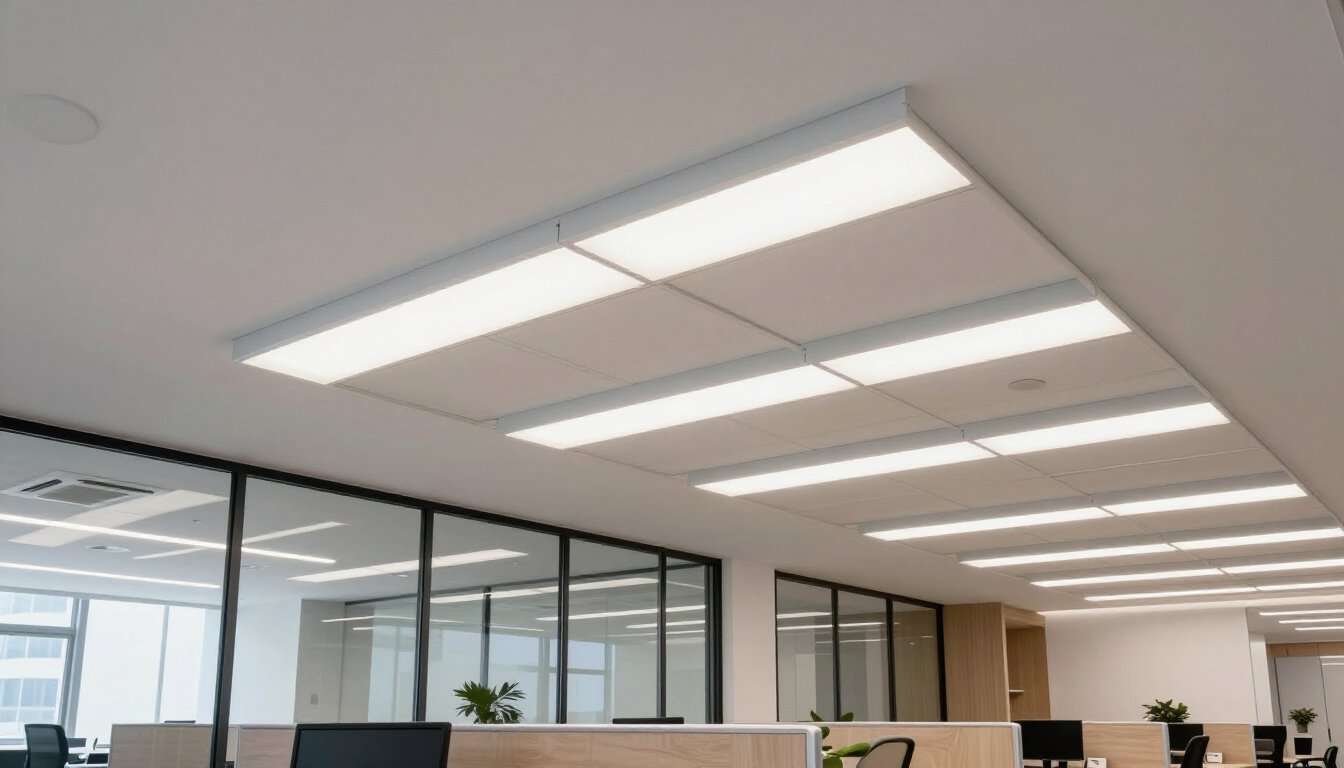
MF ceilings use a metal framework suspended from the structure, with boards fixed beneath. These systems are common in commercial and fit-out work because they allow for services coordination, create clean lines, and can be designed to meet fire and acoustic needs.
Suspended grid ceilings are also common, particularly where access to services is needed for maintenance. They can suit offices, education buildings, and retail back-of-house areas, depending on design and specification.
Both systems require accuracy and coordination. Poor setting out can create waves, misaligned junctions, and costly rework when lighting and feature elements go in.
SFS and why it matters on modern builds
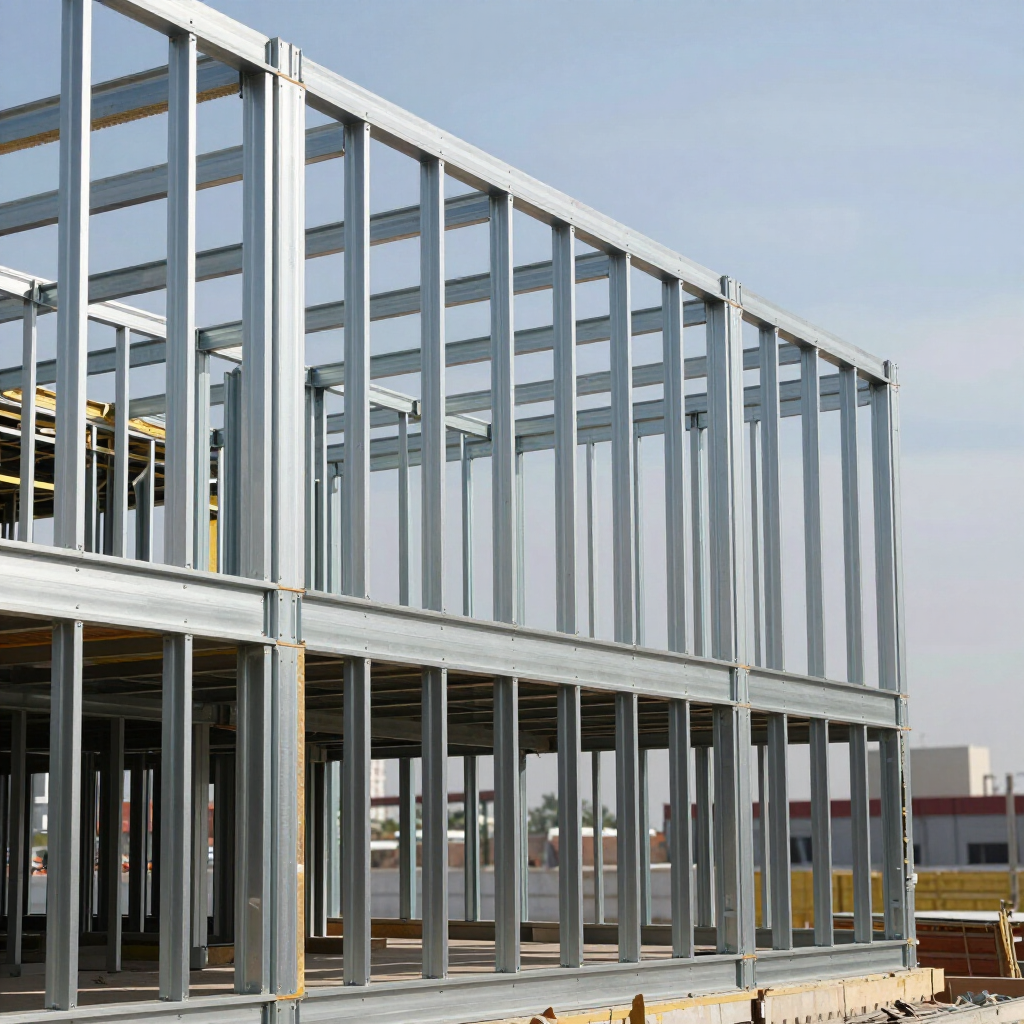
SFS, meaning steel framing system, is used to create structural framing elements and external wall support within modern construction methods. Within an internal package, SFS capability can be valuable because it supports more complex framing needs, particularly on larger projects.
For buyers, the key point is not the acronym. It is a benefit. A contractor who understands framing systems and tolerances is better placed to deliver straight finishes, reduce clashes, and solve problems early rather than hiding them behind boards and filler.
What is plastering, and where does it still shine?
Plastering remains a core trade for a reason. When used correctly, it delivers a strong, consistent finish that can be excellent under paint and lighting. It can also solve specific site issues where boards are not the best answer.
Skimming and traditional plaster finishes
Skimming is a thin coat of plaster applied over plasterboard or existing plaster to create a smooth finish. It is widely used in residential work and in areas where the client expects a traditional plaster feel.
Traditional plastering can also involve applying plaster directly to masonry backgrounds. This is less common on fast-paced commercial projects, but it still appears in certain refurbishments and in areas where existing construction demands it.
Plastering as part of a modern drylining package
On many projects, plastering is not separate from drylining. It is part of the finishing method.
A project may use drylined partitions and ceilings, then receive a skim finish where required. This can be driven by client preference, lighting conditions, or the need for a specific finish standard.
This is where combined delivery matters. If one contractor is responsible for both the board system and the skim finish, it reduces interface risk. There is less scope for one trade blaming the other for cracks, joint issues, or uneven surfaces.
Common use cases across commercial and residential projects
In commercial and retail, plastering is often used selectively. Feature areas, client-facing walls, high gloss paint schemes, and spaces with demanding lighting can all push a project towards skim finishes.
In education buildings, durability and maintenance often drive choices. The system and finish need to withstand constant use, while still being economical to repair and redecorate.
In residential projects, a skim finish remains common because it aligns with buyer expectations and is widely understood by decorators and homeowners.
Tape and jointing versus plaster skim: choosing the right finish
Many people assume that tape and jointing is automatically lower quality than plaster skim. That is not a helpful way to think about it. Both finishes can look excellent when specified correctly and delivered well. The choice should be based on the project's needs.
How tape and jointing work
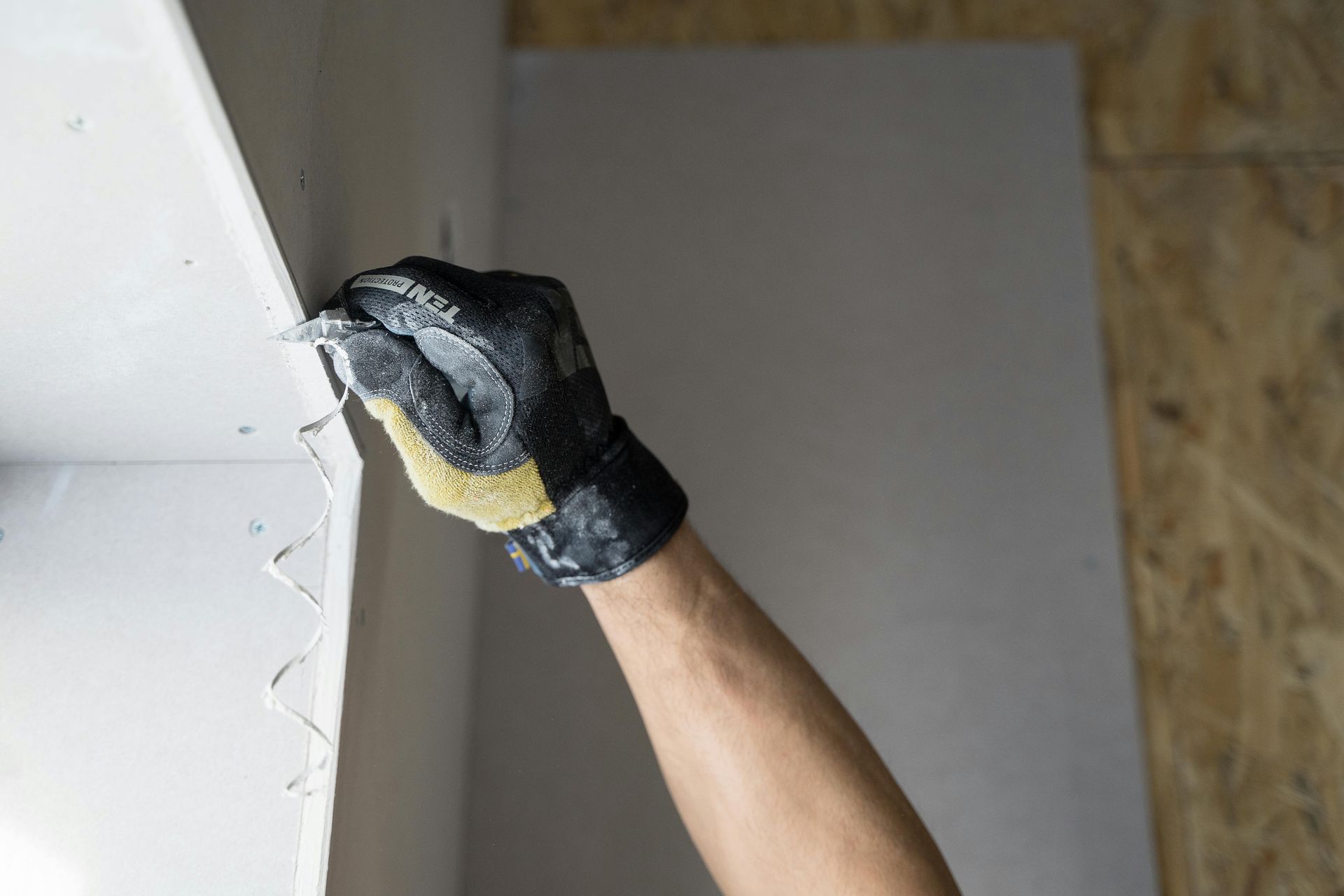
Taping and jointing is a finishing method used on plasterboard joints and fixings. Joint tape is applied, then jointing compounds are used to create a smooth transition across the board joints. The surface is then sanded and prepared for decoration.
This method is efficient and common in commercial settings. It can support fast programmes and predictable outcomes, provided dust control and quality checks are in place.
When a skim finish is the better option
A skim finish may be the better choice when the project demands a more uniform surface across the full area, or when lighting and paint finish will highlight imperfections. High-end retail and client-facing commercial interiors often fall into this category.
Skim can also be useful where boards have been cut and patched extensively, or where existing backgrounds need a consistent new face.
What affects the final look under paint and lighting
Lighting is ruthless. Raking light, spotlights, and glossy paints can reveal joint lines, sanding marks, and slight undulations.
That does not mean tape and jointing is wrong. It means it must be delivered to the correct standard, with the right system, the right process, and a realistic time allowed for finishing and inspection.
If a project is going for a high-gloss finish, the finishing specification should reflect that. It is cheaper to specify correctly and build it into the programme than to chase perfection during snagging.
Performance topics buyers care about
A good internal package is not just about looks. It is about meeting performance requirements with the right system and the right detailing.
Fire performance and fire stopping coordination
Fire performance is often built into partition and ceiling specifications. Fire-resistant boards, correct stud selection, and system-tested details all matter. So does fire stop around penetrations and junctions.
Buyers should look for a contractor who treats fire performance as a coordinated part of delivery, not as an afterthought. Practical compliance depends on workmanship and sequencing as much as it depends on the specification.
If you want a grounding point, UK Building Regulations guidance is the benchmark reference, particularly where internal linings and compartmentation are involved.
Acoustic performance for partitions and ceilings
Acoustic performance matters in offices, education buildings, residential developments, and many retail settings. It is not just about avoiding complaints. It is also about creating spaces that work.
Acoustic performance depends on the full system: studs, board layers, insulation, sealing, and junction detailing. It can be undermined by poor installation, unsealed gaps, or late service changes that introduce openings.
Thermal performance and lining options
Thermal performance is not only about external walls. Internal linings can contribute to overall comfort, especially in refurbishment projects where older construction needs improvement.
The right lining can reduce cold spots and help with condensation risk, but only if moisture management and ventilation are considered. This is where practical experience matters, because the best board in the world cannot fix a design issue on its own.
Durability in high-traffic environments such as retail and education
High-traffic spaces need robust solutions. Impact-resistant boards, proper fixing centres, reinforcement where required, and sensible detailing all help.
This is also where a combined package offers value. When partitions, ceilings, and finishes are coordinated, you reduce weak points at junctions and edges, which are often where damage and defects appear first.
Plastering and drylining on site: sequencing and common pitfalls
Good outcomes depend on good sequencing. Many defects blamed on workmanship are actually caused by poor coordination, rushed drying, or site conditions that were never controlled.
Typical order of works and coordination with M and E
Drylining often needs to be aligned with M and E first fix. Partitions and ceilings are directly affected by service routes, access needs, and late changes.
If services are not coordinated, you get on-site compromises: extra cut-outs, patching, and rework. That increases the risk of defects and consumes the programme.
A good contractor will push for clear setting out, early information, and realistic sequencing. That might sound basic, but it is where many projects win or lose time.
Moisture, drying times, and site conditions
Plastering needs drying time. Tape and jointing needs controlled sanding and stable conditions. Both suffer when the building is too wet, too cold, or not properly ventilated.
On refurbishment projects, this becomes even more important. Background moisture, hidden leaks, or poor ventilation can cause surface issues later, even if the finish looked fine on day one.
How defects happen and how good contractors prevent them
Cracks, joint lines, nail pops, and ceiling movement usually happen for predictable reasons: poor fixing, poor joint treatment, inadequate framing, or movement in the structure.
Prevention is a process. Correct materials, correct installation, quality checks at the right stages, and refusing to cover up problems with a quick patch.
The best contractors also understand when to slow down. Rushing a finish to hit a date can create weeks of snagging later.
Dust management and safe cutting and sanding practices
Cutting boards and sanding compounds create dust. Dust affects health, and it affects the finish quality.
Health and Safety Executive guidance on construction dust control is a useful reference point here. On a practical level, buyers should expect sensible dust control methods, safe working practices, and a tidy site approach. Cleanliness is not cosmetic. It is part of quality.
Why a combined internal package saves time and risk
When you split internal trades across multiple contractors, you increase interfaces. Every interface is a chance for delays, disputes, and defects.
A combined package can simplify delivery, especially on fast-paced programmes.
One contractor, fewer interfaces, cleaner accountability
If the same contractor delivers partitions, ceilings, tape and jointing, and plastering finishes, there is less room for finger-pointing.
When cracks appear, or junctions look rough, or ceiling lines do not marry up, you are not juggling multiple scopes and conflicting opinions. You have one accountable delivery partner.
That matters for main contractors and fit-out teams who need certainty, not excuses.
Programme advantages for main contractors and fit-out teams
A combined package can shorten the critical path. It reduces handover delays between trades and improves sequencing because one team can plan the work as a whole.
It also makes coordination easier. The contractor can align setting out, detailing, and finishing standards across all surfaces, rather than reacting to what another trade left behind.
Consistency of finish across partitions, ceilings, and linings
Consistency matters more than people admit. You can have a beautiful wall next to a ceiling that looks slightly off, and the whole space feels wrong.
When one contractor delivers the whole internal package, consistency improves. Not magically, but practically. The same quality checks, the same setting out approach, and the same finishing expectations apply across the scope.
Labour only versus supply and install: what to choose and when
Some projects need labour only. Others need supply and install to reduce procurement effort and improve control of system selection.
Labour only can suit situations where the client is procuring materials directly, or where site procurement structures are already set.
Supply and install can be the better option when you want a single party responsible for material compliance, system performance, and workmanship. It reduces the risk of the wrong boards being delivered or of substitutions being made without proper consideration.
AR Drylining offers both approaches, which gives buyers flexibility depending on procurement strategy.
How AR Drylining delivers plastering and drylining projects
AR Drylining is positioned as an internal trades contractor focused on drylining and finishing, with a strong emphasis on reliability, repeat business, and delivery quality. Our service coverage includes partitions, ceilings, SFS, tape and jointing, plastering, and related internal finishing work, supporting projects across multiple sectors.
Sector experience: commercial, retail, education, residential
Sector experience matters because each sector has different pressures.
Commercial projects often demand coordination with services, tight programmes, and high finish expectations in client-facing areas.
Retail fit-out work can be intensely time sensitive, with handover dates and brand standards that leave little room for error.
Education projects often prioritise durability, acoustic control, and safe delivery on live sites or tight holiday windows.
Residential developments usually require consistent quality at scale, with repeatable details and clean finishing for handover.
AR Drylining showcases work across these sectors in their portfolio, which is useful for buyers who want evidence of real delivery, not just promises.
What services are included: partitions, ceilings, SFS, tape and jointing, plastering
A buyer searching for plastering and drylining often wants clarity on what is included. AR Drylining’s positioning supports a full internal package approach, covering the main drylining structures and the finishing stages, rather than treating plastering as a separate bolt-on trade.
For procurement, this matters because it supports clearer scope definition and fewer gaps that later turn into variations.
Quality, reliability, and a repeat business mindset
Repeat business is one of the most meaningful trust signals in construction. It usually means the contractor is delivering on time, resolving issues sensibly, and maintaining quality standards that reduce snagging.
That mindset is also visible in how internal packages are priced and delivered. A contractor focused on repeat work is less likely to cut corners that cost everyone later.
Working across the UK from a South Yorkshire base
AR Drylining is based in South Yorkshire and works across the UK. For clients, that means the ability to support wider programmes, multi-site delivery, and projects outside a single local radius, while still having a clear base of operations.
What information should be provided for an accurate quote?
The fastest way to get a clean, accurate price is to give clear information up front. Vague scopes create vague pricing, and vague pricing creates disputes later.
Drawings, scope, heights, and performance requirements
Drylining and plastering packages are usually driven by drawings and specifications. Partition types, wall heights, ceiling types, and performance requirements should be clear.
If fire and acoustic performance are required, state the performance targets and the system preference if one exists.
Programme dates and access constraints
Internal trades are heavily affected by the programme. Share intended start dates, handover milestones, and any phased access.
Also, share practical constraints. Restricted working hours, live environments, noisy work limits, and access limitations all affect productivity and sequencing.
Finishes and decoration expectations
The finish standard should be explicit. Tape and jointing level, skim requirement, paint finish expectations, and lighting conditions can all change what good looks like.
If the finish will be under strong feature lighting, say so. That is not a detail. It is a driver of time and process.
Site readiness and coordination items
Let the contractor know whether the building will be weather-tight, whether the floors are level, whether the first fix services will be complete, and what the coordination plan is with other trades.
The more realistic the site readiness picture, the more accurate the quote will be, and the fewer surprises there will be later.
FAQ
What is the difference between plastering and drylining?
Drylining uses boards and framing systems to create walls, partitions, linings, and ceilings. Plastering is a wet finish method that creates a smooth surface, often applied as a skim coat over boards or existing plaster. Both can deliver high-quality finishes, but they suit different programmes and system needs.
Is taping and jointing the same as plastering?
No. Taping and jointing is a finishing method for plasterboard joints using tape and compounds. Plastering usually refers to applying plaster, often as a skim coat, to create a continuous, smooth surface. Both can be appropriate depending on the required finish and project conditions.
Which is faster on site, drylining or plastering?
Drylining systems can be faster for creating internal layouts because framing and boards are quicker to install than traditional wet plaster across large areas. However, finishing time still matters. Tape and jointing can be efficient, while skim finishes can add time for application and drying. The fastest approach depends on the full package and the programme.
Do drylined walls meet fire and acoustic requirements?
Yes, when the correct system is specified and installed properly. Fire and acoustic performance is system-based, meaning boards, studs, insulation, fixings, and detailing must match tested or approved requirements. Workmanship and sealing are just as important as the materials.
What details do you need to price a drylining package?
You typically need drawings, partition types, wall heights, ceiling types, performance requirements, finish standards, and programme dates. Site constraints, access, and phasing also affect pricing because they influence productivity and sequencing.
Do you cover my area if I am outside South Yorkshire?
AR Drylining works across the UK from a South Yorkshire base, so many projects outside the region can be supported depending on scope, programme, and logistics. The quickest way to confirm is to share your site location and project requirements during an enquiry.
Get a plastering and drylining package priced properly
Plastering and drylining are not competing trades. They are tools. The best projects use the right tool for the right job, based on programme, performance, finish expectations, and the reality of how a site runs.
Drylining provides the structure for internal walls and ceilings, with performance built into the system. Plastering and finishing methods, such as tape and jointing, bring those surfaces to life, ready for decoration and handover.
If you are a main contractor, fit-out contractor, developer, or project manager, the biggest win is often reducing interfaces. One contractor delivering partitions, ceilings, SFS, tape and jointing, and plastering can simplify sequencing, improve accountability, and reduce snagging risk.
AR Drylining delivers plastering and drylining packages across the UK, offering both labour-only and supply and install options. If you want your internal package scoped clearly and priced accurately, contact AR Drylining with your drawings, performance requirements, and programme dates, and get practical advice on the best approach for your project.